Learn about Kitchen Appliances and Tools: Functions, Types, and Care in 2026
This guide offers an educational overview of kitchen appliances and tools, focusing on how they support food preparation, storage, and cooking in 2026. It explains terminology, common categories, and practical considerations for understanding how different devices fit into household routines. The emphasis is on neutral, research-informed information rather than commercial guidance, with attention to safety, maintenance, and long-term use.
Engaging Introduction
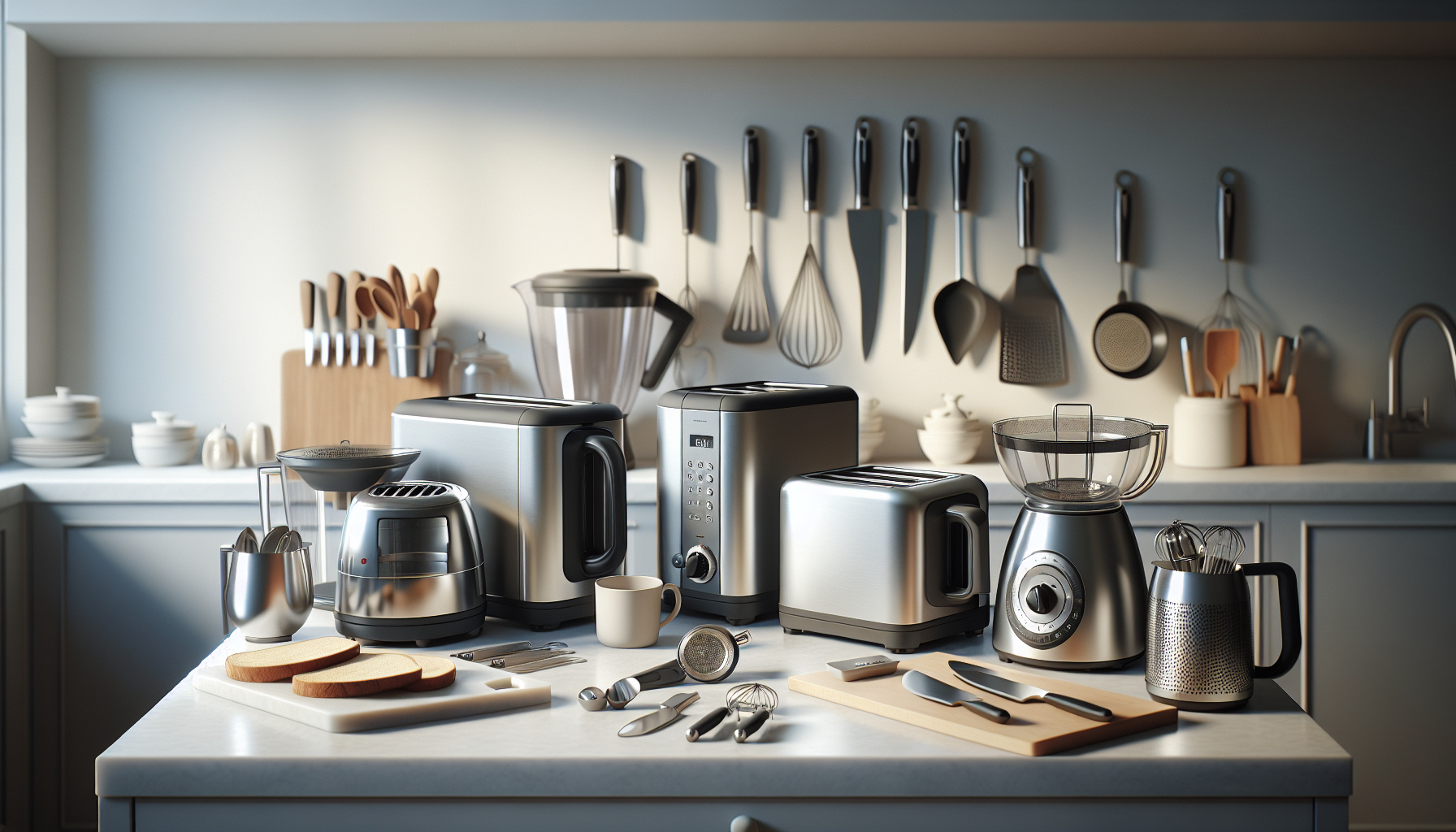
Kitchen appliances and tools form a broad category of equipment used to prepare, preserve, heat, blend, mix, slice, grate, and measure ingredients. In 2026, households encounter a mix of traditional devices and newer technologies that emphasize energy efficiency, reliability, and safety. This guide aims to present a neutral, evidence-informed overview of how these devices are categorized, what features commonly exist, and how to evaluate their suitability for different cooking styles, household sizes, and maintenance expectations. The goal is to support informed understanding rather than promotional choices, recognizing that the utility of any appliance depends on the context of use and the handling practices of the user.
Practical Guidance for Evaluating Kitchen Appliances and Tools
Evaluating kitchen appliances involves understanding how a device fits into daily routines, the tasks it is designed to perform, and the conditions under which it operates. The following sections offer criteria, examples, and comparisons to support informational assessment rather than marketing claims.
Categories and types
- Major appliances include built-in or freestanding devices that handle primary cooking and cold storage, such as refrigerators, ranges, ovens, dishwashers, and freezers. These items typically require dedicated space and connect to utilities.
- Small appliances are compact devices used for specific tasks, such as blending, grinding, heating, or mixing. Examples include blenders, coffee makers, toasters, and food processors. These units are usually portable, have shorter replacement cycles, and are often rotated among tasks depending on household needs.
- Kitchen tools and accessories encompass utensils, measuring devices, cutting surfaces, bakeware, and other non-powered implements that aid in food preparation. Tools frequently complement powered appliances and contribute to workflow efficiency.
- Smart and connected devices refer to appliances that offer digital interfaces, scheduling features, or connectivity with home networks. Such devices may provide data about usage, energy consumption, or maintenance needs.
Evaluation criteria
- Intended tasks Identify the primary functions the device is designed to perform. A blender is typically used for emulsifying and puréeing, while a scale is used for precise measurement.
- Power and performance Consider the device’s motor or mechanism capacity, speed settings, and control precision. For example, a blender’s wattage gives a rough sense of power, but other factors such as blade design and container volume influence performance.
- Energy efficiency Look for energy labeling or efficiency ratings when available. Energy-efficient models may reduce running costs over time and can be a consideration in kitchens with extensive appliance use.
- Durability and repairability Review the availability of replacement parts and service options. Some devices have modular components that can be replaced rather than discarded, affecting long-term use.
- Safety features Evaluate built-in protections such as overheating prevention, non-slip bases, and blade guards. Consider how safety features align with household needs, especially in households with children or repeated appliance use.
- Maintenance needs Understand cleaning requirements, descaling needs for certain devices (e.g., coffee makers, kettles), and the ease of disassembly for thorough cleaning.
- Size and footprint Assess the physical dimensions and storage requirements, noting how a unit’s size fits into available counter or cabinet space.
- Noise and comfort Consider operating noise, especially in open-plan living spaces or early-morning use scenarios.
Examples and comparisons
Consider how different devices serve overlapping tasks or how their features influence usage patterns. A stand mixer with a powerful motor and multiple attachments may perform better for baking tasks than a handheld mixer, but it also requires more counter space and power. A high-capacity blender can handle thick smoothies and hot soups, but it may be more energy-intensive and harder to clean compared to a simple hand blender for small tasks. When evaluating options, it can help to map tasks to devices and then assess which features most closely match those tasks. For broad context, see resources such as [Energy Star](https://www.energystar.gov/) for energy considerations and the broader article on kitchen appliances available at [Wikipedia – Kitchen appliance](https://en.wikipedia.org/wiki/Kitchen_appliance).
Practical decision framework
- List the core tasks you perform most often in the kitchen (e.g., blending, chopping, reheating).
- Check for any space constraints (counter or cabinet space, electrical outlets).
- Assess the energy use implications of devices used frequently or for long durations.
- Evaluate cleaning and maintenance demands, including descaling, blade replacement, and parts compatibility.
- Review safety and durability considerations, such as heat resistance of plastics, metal wear, and cord storage.
For further reading on general kitchen appliance concepts, see the following informational sources: [Energy Star](https://www.energystar.gov/), and [Wikipedia – Kitchen appliance](https://en.wikipedia.org/wiki/Kitchen_appliance).
Long-Term Considerations for Kitchen Appliances and Tools
Long-term use of kitchen appliances involves ongoing attention to maintenance, safety, energy use, and evolving needs. The following considerations address durability, lifecycle, and responsible use without promoting any specific product lines.
Maintenance and care
- Cleaning routines Regular cleaning reduces residue buildup that can affect performance and flavor transfer. For many devices, disassembly is required for thorough cleaning; consult the manufacturer’s manual when available and follow safe procedures for electrical components.
- Descaling and mineral buildup Appliances that handle water, such as kettles, coffee makers, or steamers, may require periodic descaling to remove mineral deposits that affect taste and speed.
- Blade and attachment checks In devices with rotating blades, check for dullness, chips, or looseness. Replacements parts, when available, can extend device life.
- Calibration and accuracy Some tools, like measuring devices or scales, may require recalibration over time to maintain accuracy.
Safety and risk management
- Electrical safety Ensure cords, plugs, and housings remain undamaged. Avoid placing appliance bases in areas with high moisture or heat exposure beyond rated specifications.
- Child safety Store sharp tools such as knives securely and supervise the use of devices with moving parts around children.
- Fire and heat considerations Follow usage limits and avoid overloading electrical circuits. Regularly inspect electrical outlets for warmth or signs of wear.
Environmental and lifecycle aspects
- Energy use For devices operated frequently, energy efficiency, standby power, and load management can influence overall household energy consumption.
- Repairability and parts availability The ability to repair or replace components rather than discard the entire unit contributes to longer life and reduced waste.
- End-of-life considerations When a device reaches the end of its useful life, consider responsible recycling options for electronics and preventing improper disposal of hazardous components.
To explore general principles of energy efficiency and responsible appliance use, see established information sources such as Energy Star and the Energy efficiency article on Wikipedia, which provide context for how efficiency programs and standards influence product design and consumer choices.
Table: Common Kitchen Appliances – Typical Power Ranges and Roles
Note: Power ranges vary by model and application. The values below represent typical ranges seen across common household devices and serve as a general reference rather than a guaranteed specification.
| Category | Typical tasks | Typical power range (W) | Notes |
|---|---|---|---|
| Blender (countertop) | Liquidizing, puréeing, emulsifying | 300–1500 | Higher end for heavy blends; some models include heat and variable speeds. |
| Stand mixer | Baking doughs, beating, whipping | 250–1000 | Power varies with attachments and bowl size. |
| Toaster or toaster oven | Toasting, baking small items | 800–1800 | Toaster ovens offer more versatility but may use more energy per session. |
| Food processor | Chopping, slicing, shredding | 400–1500 | Higher-end models handle tougher ingredients with efficiency. |
| Coffee maker | Brewing beverages | 600–1200 | Espresso machines can be significantly different in power usage. |
| Microwave oven | Reheating, cooking | 600–1200 | Power settings influence cooking time and texture outcomes. |
| Refrigerator (running) | Cold storage | About 40–250 | Running power varies with model, insulation, and compressor design; energy use is typically reported as annual kWh. |
| Dishwasher | Cleaning dishes | 1200–2400 | Energy and water use depend on cycle efficiency and options chosen. |
Informational References and Context
For broader background on kitchen equipment and related concepts, consult non-commercial informational resources such as Wikipedia: Kitchen appliance and general energy-efficiency information from public institutions. The following Markdown-style references are provided as examples of how informational resources can be connected within an educational article: [Energy Star](https://www.energystar.gov/), [Energy.gov – Energy Saver](https://www.energy.gov/energysaver/), [Wikipedia – Kitchen appliance](https://en.wikipedia.org/wiki/Kitchen_appliance).
Frequently Asked Questions
- What distinguishes a kitchen appliance from a kitchen tool?
- In common usage, appliances are devices that require electrical power or mechanical action to perform a task, whereas tools are often manual implements that do not rely on electricity. However, the distinction can be blurred in some contexts, such as manual coffee grinders versus electric grinders.
- How can I assess energy efficiency for a new appliance?
- Look for energy labeling where available (for example, Energy Star ratings on qualifying products). Consider running power consumption, standby power, and the capacity relative to your needs. Reading user manuals and product data sheets can provide more detail on efficiency features.
- What maintenance practices support long-term use?
- Regular cleaning, descaling where appropriate, keeping blades sharp and attachments in good condition, and following recommended maintenance schedules from trusted sources help extend the life of appliances and maintain safe operation.
- Are there safety considerations when using multiple appliances at once?
- Yes. Avoid overloading circuits, ensure proper ventilation, keep cords away from heat sources, and supervise devices with moving parts. If uncertain, consult the device’s instruction manual or seek guidance from a qualified professional.
Sources
Summary: This article provides a neutral, educational overview of kitchen appliances and tools, explains how to evaluate different categories and features, discusses long-term maintenance and safety considerations, and presents a factual data table on typical power ranges. It also offers Markdown-style informational links to reputable sources and concludes with a set of frequently asked questions and authoritative references to support informed understanding in 2026.